Every student deserves the opportunity to learn, participate, and grow without unnecessary barriers. Yet for many blind and visually impaired students, access to education often depends on whether learning materials are available in a format they can actually use. While schools and universities continue to embrace inclusion, accessibility remains one of the most important factors in determining how effectively students can engage with their coursework.
Think about a typical school day. Students read textbooks, review notes, complete assignments, take exams, and access online resources. Most of these activities revolve around written information. When that information is unavailable in an accessible format, students may struggle to keep pace with their peers, regardless of their ability, intelligence, or motivation.
This is why braille learning materials remain an essential part of modern education. They provide students with direct access to information, helping create a more inclusive and equitable learning environment. More importantly, they support the broader goal of accessible education by ensuring that students are evaluated based on their knowledge and skills rather than their ability to access content.
Why Braille Continues to Matter in Modern Classrooms
Technology has transformed education in remarkable ways. Screen readers, digital learning platforms, and assistive software have made information more accessible than ever before. However, these tools have not replaced the importance of braille.
For many visually impaired students, braille literacy is the equivalent of print literacy for sighted learners. It allows students to understand spelling, punctuation, sentence structure, and written formatting in a way that audio alone cannot provide. Listening to information and reading information are two very different experiences.
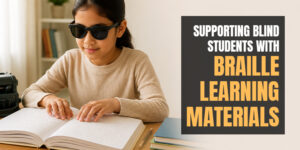
Students who have access to braille learning materials are often better positioned to engage deeply with academic content. They can revisit information at their own pace, make annotations, review complex concepts, and develop stronger literacy skills. In many cases, braille serves as the foundation that enables independent academic growth throughout a student’s educational journey.
The Role of Braille Educational Resources in Daily Learning
Educational success depends on consistent access to information. Students encounter written content throughout every stage of their academic experience, from elementary school through higher education.
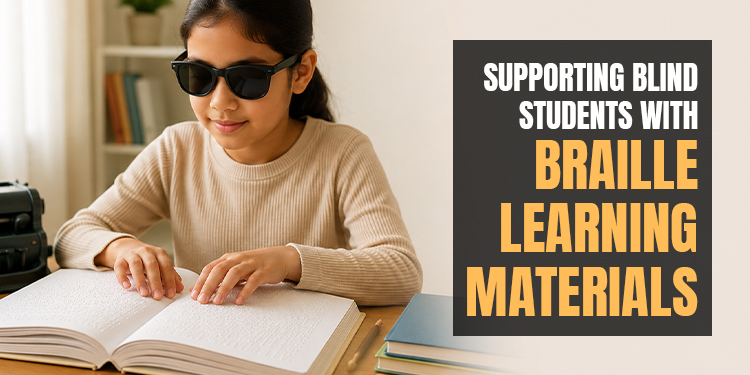
Professional braille educational resources can include textbooks, classroom handouts, study guides, worksheets, examination papers, laboratory instructions, research materials, and reference documents. When these resources are available in braille, students can participate more fully in classroom activities and complete academic tasks independently.
What often gets overlooked is the cumulative impact of accessibility. A student may be able to overcome one inaccessible worksheet or one unavailable chapter. However, when accessibility gaps occur repeatedly, they can affect confidence, participation, and academic progress over time.
Supporting Independent Learning and Academic Confidence
One of the most valuable outcomes of braille accessibility is independence. Higher levels of independence allow students to take ownership of their education. Instead of relying on teachers, aides, parents, or classmates to access information, students can engage with learning materials on their own terms.
This becomes particularly important as students advance through school. Academic success increasingly depends on self-directed study, time management, and independent research. Students who can access braille educational resources independently are often better prepared to manage assignments, prepare for examinations, and develop effective study habits.
Independence also has a powerful effect on confidence. When students can navigate their educational responsibilities without constant assistance, they often feel more capable, motivated, and engaged in the learning process.
Creating Truly Inclusive Classrooms
Many schools discuss inclusion, but genuine inclusion requires more than placing students in the same classroom. It requires providing every student with meaningful access to the same educational opportunities.
Accessible education becomes more effective when all students can participate in discussions, complete assignments, and access instructional materials without unnecessary obstacles. When braille materials are integrated into classroom planning, educators can create learning environments that support participation from the very beginning.
For teachers, accessible resources also simplify instruction. Rather than constantly modifying content or finding alternative solutions, educators can focus on delivering lessons that benefit all learners. This helps create a classroom culture where accessibility is embedded into the educational experience rather than treated as a special accommodation.
The Importance of Accurate Braille Transcription
Accessibility is only effective when it is accurate. A common misconception is that braille transcription simply involves converting text into raised dots. In reality, professional transcription requires specialized knowledge of formatting standards, braille codes, document structure, and readability requirements.
Educational materials frequently contain tables, charts, headings, footnotes, references, and technical terminology. Each element must be carefully formatted to ensure students can navigate the content effectively.
Even small transcription errors can affect comprehension. A misplaced symbol, incorrect formatting choice, or inconsistent structure can create confusion and disrupt the learning experience. This is why schools and universities increasingly rely on professional providers when creating braille educational resources.
The Future of Accessible Education
As educational institutions continue to strengthen their commitment to accessibility and inclusion, the demand for high-quality braille learning materials will continue to grow.
Technology will undoubtedly play an important role in expanding access, but braille will remain a critical literacy tool for many students. The combination of digital accessibility tools and professionally developed braille resources creates powerful opportunities for more inclusive learning environments.
Ultimately, accessible education is about more than compliance. It is about ensuring every student has the opportunity to learn, participate, and achieve their full potential.
Final Thoughts
Every student deserves access to educational content in a format that supports independence, confidence, and academic success. When schools invest in high-quality braille learning materials, they are investing in equal opportunity and meaningful inclusion.
At Braille Music and More, we partner with schools, colleges, and educational institutions to create accurate, reliable, and professionally formatted braille educational resources that support students across a wide range of academic subjects. From textbooks and study guides to specialized educational content, our solutions help educators build truly accessible education environments where every learner has the opportunity to thrive.