Modern design and communication are increasingly focusing on accessibility. Information must be made accessible to all, including those who are blind or have visual impairments.
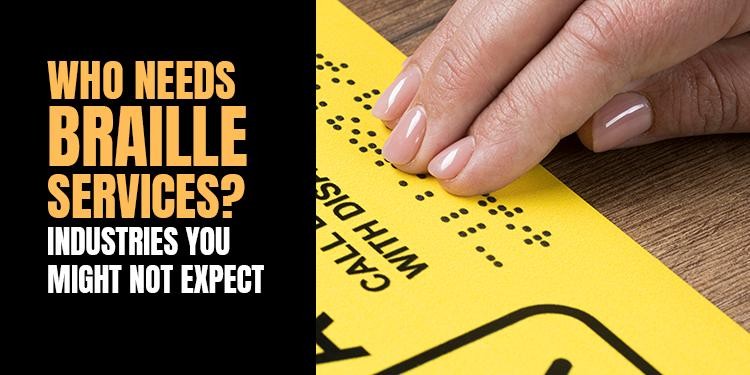
Braille is a key tool in this process. It allows the user to access information and read by touch. Braille is not just for schools or libraries. Many industries today rely on braille service providers to create accessible material. These services support navigation, education, and safety in public and private areas.
Knowing which industries need braille services helps organizations understand where accessibility improvements are needed.
Education and Schools
Braille is used in many sectors, but education is probably the most common. Visually impaired students use braille to complete homework, read textbooks, and take part in classroom learning.
Many schools require:
- Braille textbooks
- Study Materials
- Exam papers
- Diagrams and learning aids
They help students to learn independently. Accessible educational resources also promote inclusive classrooms, where all students have access to the same information.
Many educational institutions use braille translation services to convert printed educational materials into readable formats.
Healthcare and Medical Facilities
In hospitals and healthcare facilities, it is important to provide clear information. Patients need to be able to navigate safely, locate departments, and understand instructions.
Braille signs help visually impaired patients identify.
- Patient rooms
- Emergency exits
- Restrooms
- Department names
- Floor directories
The accessibility of healthcare environments can reduce confusion and increase safety. Many hospitals are investing in braille signage solutions throughout their facilities.
Hospitality and Hotels
Hotels are increasingly adopting accessibility standards. The property should be accessible to all guests, regardless of their abilities.
In the hospitality industry, braille services can be used for:
- Signs indicating the number of rooms
- Elevator controls
- Emergency Instructions
- Accessible menus
- Hotel directory
Braille information enhances the guest experience. This also shows that the hotel is committed to inclusive design.
Transportation and Travel
Transport hubs can be complex environments. Travellers need clear navigation in airports, train stations, and metro systems.
Braille signs help visually impaired passengers find their way around.
- Gates and platforms
- Tickets counters
- Boarding areas
- Restrooms
- Checkpoints for security
Navigating these spaces can be difficult and stressful without accessible signage.
For this reason, transportation authorities often partner with braille service providers when designing a wayfinding system.
Corporate Offices
The corporate environment is another area that requires more braille services. As part of their diversity and inclusion efforts, many companies improve workplace accessibility.
The braille signs in offices may include the following:
- Meeting room signs
- Floor directories
- Restroom signs
- Emergency exits
- Department identifiers
Employees and visitors can move freely within the office environment, with accessible workplaces. As part of their accessibility upgrades, companies often include custom braille print.
Government and Public Buildings
All government facilities, including courthouses, municipal offices, and administrative centres, must make sure that information is available to the public. The government must ensure that all information is accessible to the public, including in buildings like courthouses, administrative centres, and municipal offices.
Braille signs and documents can help visitors find offices and understand important information.
The following are typical braille materials:
- Room signage
- Signs directing traffic
- Public information displays
- Accessible documents
These resources support equal access to government services.
Retail and Shopping Centres
Retail stores and shopping centres are now adopting braille accessibility solutions. It can be hard to navigate in these environments without clear signage.
Braille is available on:
- Store directories
- Elevator controls
- Restroom signs
- Department labels
- Product Information
Accessible retail spaces create a better shopping experience for everyone.
Cultural Institutions and Museums
Museums, galleries, and cultural institutions are expanding accessibility initiatives. Braille materials allow visually impaired visitors to explore exhibits independently.
Many museums offer:
- Braille exhibit descriptions
- Tactile maps
- Accessible Gallery Guides
- Braille brochures
These resources enable visitors to interact with exhibits in engaging ways.
Why More Industries Are Adopting Braille
Standards for accessibility are changing in many industries. Accessible design benefits all. The use of readable signage and materials will improve communication, navigation,n and safety.
Accessibility also reflects social responsibility, thoughtful design, and strong business practices. Working with experienced braille service providers can help organizations ensure their accessibility solutions are accurate, durable, and easy to use.
The use of braille is no longer restricted to schools. They are now used to improve accessibility in the healthcare industry, as well as in transportation, corporate offices, and retail environments. Industries that need braille are realizing the benefits of braille communication as accessibility expectations increase.
Those organizations that place a high priority on accessibility create an environment where people can navigate with confidence and independence. This commitment improves usability and inclusivity in modern spaces.
Final Words
Accessibility is no longer optional for organizations in all industries. Readable, clear braille signage allows visually impaired people to move around independently, navigate, and access information. Braille solutions can help create safer, more inclusive, and easier-to-use environments for all.
It is important to work with professionals who have experience in the field. This will ensure that the braille materials you create are accurate, durable, and placed correctly. Braille Music and More, a company that offers braille solutions, helps organizations create high-quality braille documents, signage, and tactile solutions. These solutions meet accessibility standards.
Now is the right time to move forward with your accessibility plans. Working with braille experts can help you create spaces that are truly accessible and where visitors can navigate confidently.