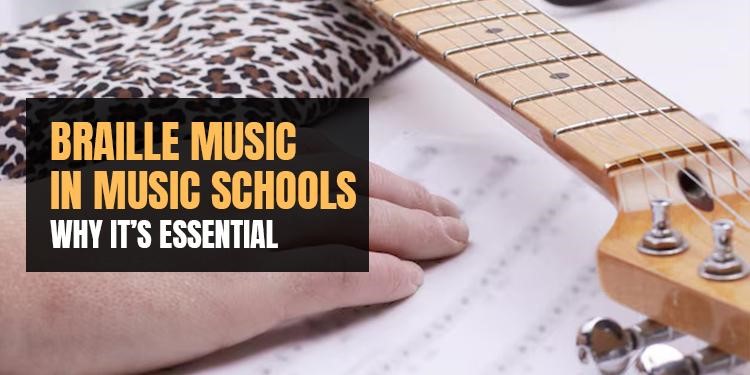
Blind people are a part of the group of individuals who want to learn, practice, and perform in music schools. The first issue is that they don’t have access to music notation, which is required to complete the experience. Teaching braille music helps people learn and understand rhythm, pitch, musical phrasings, and the overall structure of music.
Moreover, the world is becoming more aware of the importance of inclusive education, and braille music is emerging as a specialty for music educators. The skill that braille helps develop is the ability for students to feel self-assured and active in school ensembles, classes, and performances.
Educational Music Schools for Teaching People to Read Music
People with visual impairments may have to rely on auditory methods and memorization. These methods may be useful, but they are not nearly as effective as being able to notate music.
Music education in braille encourages students to fully participate in the learning process. Using the proper resources, students can:
• Engage in guided lessons in music theory and musical notation
• Complete exercises assigned at the same pace as their classmates
• Study music independently
• Prepare for exams and performances with confidence
All of the above make students more independent and lead to stronger learning outcomes. Most importantly, it ensures that students’ potential is measured by their musical talent rather than their access to resources.
Developing and Strengthening Musical Literacy
For long-term development as a musician, learning to read music is key. Even the fundamentals of braille music teaching help students learn the components of structure, timing, and musical expression.
When students learn to read music, the notation itself provides a deeper understanding of music’s structure. A student’s development is strengthened in different ways through braille literacy as follows:
• Assist students in understanding and interpreting music and symbols
• Enhance understanding of rhythm, tempo, and musical pacing
• Improve classroom musical collaboration with instructors and peers
• Prepare students for further education or specialized musical training
This foundation allows students to freely take on additional musical works, work with other musicians, and continue their self-learning.
Promoting Confidence and Self-directed Practice
Students’ confidence will increase when they have the opportunity to practice independently, without being guided every step of the way. With braille music, they can control how they practice. They may mark difficult sections, repeat sections, and practice exercises as often as they’d like.
Practice that is independent of the teacher is also made easier and more possible when braille music is available. It allows students to:
– Develop consistent practice habits
– Eliminate the frustration that comes from using materials that are not accessible
– Self-track progress made from practice
– Walk into performances feeling more prepared
Confidence helps students from disengaging and dropping out of music education. They are more likely to excel in music when they can practice how and when they want.
Making It Possible to Take Part in Ensembles and Concerts
Many music schools prioritize group performance in bands, choirs, or orchestras. For them to participate fully, students need the same access to musical material as their peers. With braille sheet music, students can practice and gain the confidence to play with the group.
Some of the benefits of using braille music in a school setting are:
– The conductors of the group can manage their rehearsals in a much more centralized way
– Students can organize and manage their parts as their own responsibilities
– Students can change the focus from memorizing to playing with feeling
– The group as a whole can have a more collaborative experience.
When music is accessible, the whole group can participate, and each musician’s individual contributions are not minimized. They are highlighted and equally valued so that no one is left out.
Support for Teachers and Institutions
Not only do braille music materials help students, but they also help educators. When instructors have reliable materials, they can devise lesson plans that meet all students’ needs, keeping them engaged as active participants in the learning process.
When schools focus on accessibility, they can
– Develop more inclusive music programs
– Fulfill accessibility criteria
– Increase student participation and retention
– Provide more opportunities for visually impaired musicians
Partnering with providers like Braille Music and More provides schools with well-organized Braille scores, aiding both teaching and performance. With this, more inclusive teaching can be achieved.
Improving the Future of Music Education Inclusively
As understanding of the need for inclusion in music education has grown, more music schools have begun to pay attention to braille resources. Braille music education removes barriers to learning music for visually impaired individuals.
The inclusion of braille music in programs will contribute to
– Confident musicians
– Inclusive environments
– Collaborative groups
– Vibrant art communities
Accessible notation creates opportunities for learning and studying for students at every level and also fosters creativity and professional growth.
Music education should open doors, not create barriers. If your institution is committed to inclusive learning, now is the time to make braille music a core part of your program.