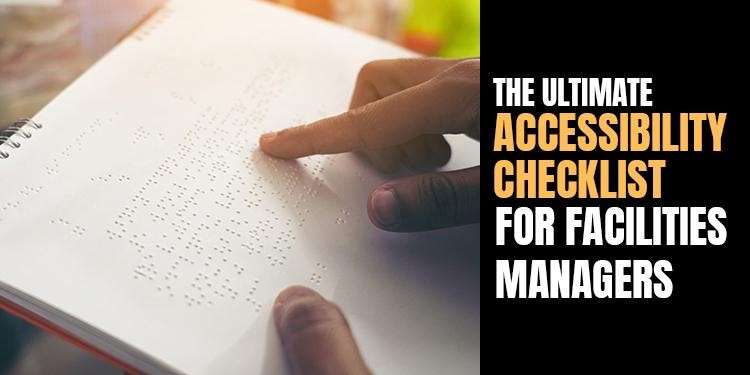
The role of the facilities manager is crucial in maintaining accessible and safe buildings. Many elements, from signage to navigation systems, affect how people can easily move around a space.
An accessibility checklist ensures that buildings are accessible to people with different abilities. This checklist helps to ensure that buildings are accessible for people with different abilities.
Here is a checklist that facility managers can use to assess accessibility in their building.
Entrance Accessibility
The building entrances must be easily accessible to all.
Checklist Items Include:
- Entrance signage that is clearly visible
- Easy-opening or automatic doors
- Ramps and step-free entryways
- Lighting at entranceways
The first impression that a facility is inclusive is created by its accessibility.
Parking and Accessible Pathways
Accessibility must begin before the visitors even enter the building. The parking areas and walkways should be accessible to all.
Check for:
- Parking spaces with clear accessibility signs
- Parking is accessible near the building entrance
- Level and smooth walkways
- There are ramps at places where the elevation changes.
- Non-slip surfaces for pathways
The clear and well-maintained pathways reduce obstacles and allow visitors to reach the building easily.
Wayfinding and Navigation
The navigation within a building must be easy and predictable.
Check for:
- Clear directional signage
- Floor directories
- Visible room numbers
- Consistent sign placement
Wayfinding systems that are accessible help visitors navigate a building with ease.
Braille and Tactile Signage
Braille signage is essential for accessible environments.
The braille signage should be used in key areas such as:
- Restrooms
- Elevators
- Emergency exits
- Room Numbers
- Department names
Signage that is properly placed allows visitors with visual impairments to identify the location independently.
Elevator Accessibility
Elevators should provide all users with clear information.
Check for:
- Braille buttons
- Audio floor announcements
- Tactile floor indicators
- Accessible control panel height
This feature helps to ensure safe vertical navigation in the building.
Restroom Accessibility
Restrooms must be easily accessible.
The following items are included in the accessibility checklist:
- Braille restroom signage
- Stalls with accessible access
- Grab bars
- Space for mobility devices
Restroom accessibility promotes the dignity and comfort of visitors.
Emergency Information
Everyone must have access to emergency systems
Included in the facilities should be:
- Audible alarms
- Visual alarms
- Clear emergency exit signage
- Tactile exit identification
Safety is improved by emergency accessibility in all facilities.
Information and Documents
Printed materials, such as instruction manuals, directories, or informational guides, are often provided by facilities.
Managers should offer customized braille printing on essential documents.
Examples include:
- Safety Instructions
- Building guides
- Public Notices
- Event Information
By making documents accessible, you can ensure that all visitors get the important information.
Digital Accessibility in Facilities
Digital resources are available in many facilities, such as touchscreen information systems, digital directories, or self-service kiosks.
All users should have access to these tools, and facility managers must ensure that they are available.
Accessibility considerations include:
- Audio or screen readers are available.
- High-contrast displays
- Navigation made simple and clear
- Height and controls of the kiosk are accessible to all
Digital accessibility ensures technology inside buildings is inclusive.
Staff Training and Awareness
Accessibility does not just refer to physical infrastructure. The awareness of staff also plays an important role.
The training that facilities teams should receive includes:
- Visitors with visual impairments can be assisted.
- Understanding accessibility features
- Maintaining accessible pathways
Staff who are well-trained can help ensure that the accessibility features are used efficiently.
Regular Accessibility Audits
It is not enough to make improvements in accessibility once. Accessibility must be maintained as buildings change.
Facility managers should perform periodic audits using a checklist for accessibility.
These reviews can help you identify areas in need of improvement, such as missing signs, damaged accessibility features, or areas where improvements are needed.
Regular assessments are conducted to ensure accessibility is consistent throughout the entire building.
Create Accessible Facilities
Accessible buildings promote independence, comfort, and safety for all. Facilities managers have a unique opportunity to make buildings more accessible.
A structured checklist can help organizations identify and address gaps. Small design decisions, from signage to navigation systems, can have a big impact on how people interact with a space.
Buildings become more inviting and accessible for all visitors when accessibility is a part of the facility management.
Building Truly Accessible Facilities
It is not an easy task to create accessible buildings. This is a continuous responsibility that involves planning, evaluation, and thoughtful design. The role of facilities managers is to ensure that buildings are accessible for all, including those with mobility or visual impairments.
This process is made easier by using a structured checklist. This helps to identify areas for improvement and ensures important accessibility features aren’t overlooked. Clear signage, braille labelling, tactile indicators, and accessible entrances are all elements that work together to create an environment that promotes independence and safety.
Even small improvements can make a big difference. Clear navigation systems reduce confusion. Signage that is clear and concise helps visitors navigate a building with confidence. All visitors can enjoy the facility if it has accessible restrooms, elevators, and emergency information.
Make Accessibility a Priority in Your Facility
Working with professionals who have experience in accessibility can help make the process easier and more efficient. Braille Music and More, a specialist in braille signage and tactile solutions for real-world environments, supports organizations.
Facilities managers can work with experts to ensure that accessibility solutions are placed correctly, durable, le and adhere to established standards. It is important to invest in braille signage solutions and professional accessibility solutions.
It’s about creating spaces that allow visitors to navigate, understand the information, and feel welcomed.
Take the first step towards creating environments that support inclusion by reviewing your facility with an accessibility checklist.